
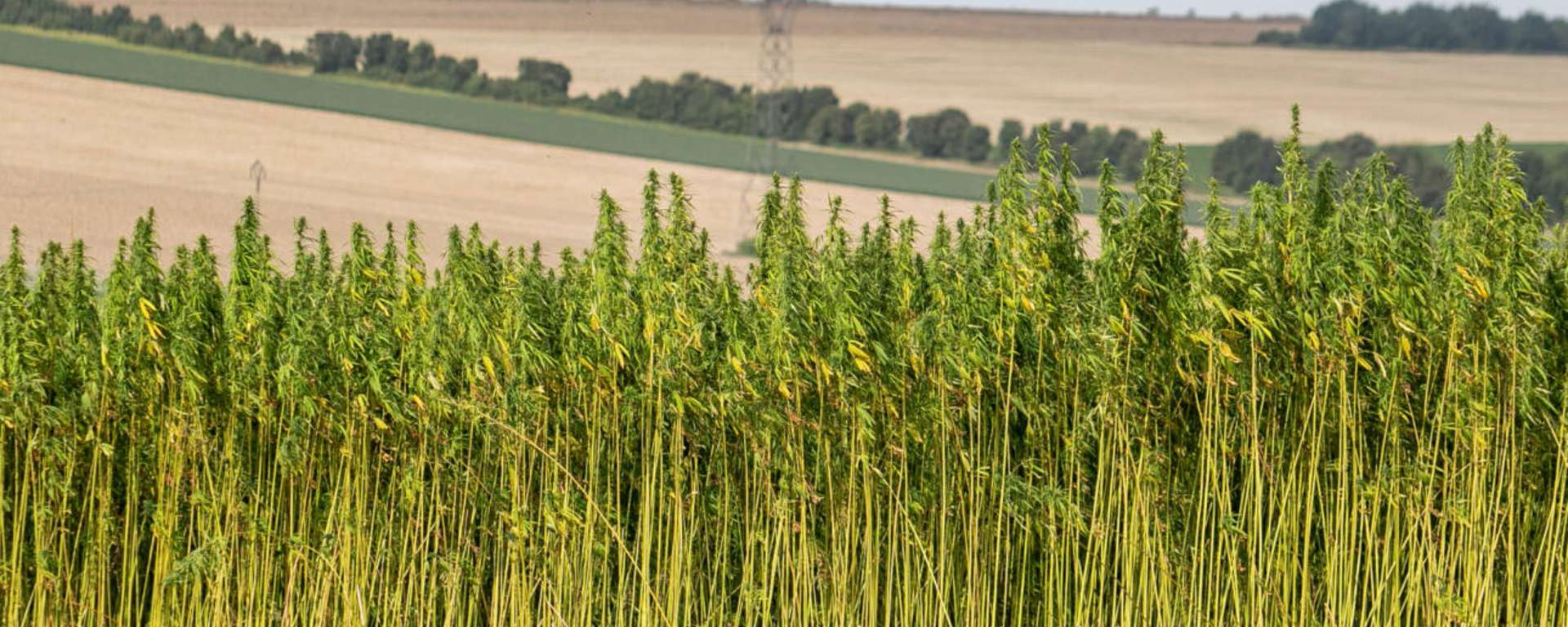
In the Rhône Valley, hemp has long been a staple of everyday life. Grown for its fibres, seeds and domestic uses, it has shaped agricultural practices, landscapes and rural skills for centuries. Its history sheds light on how a local resource can be an integral part of rural life, before declining and then re-emerging in different forms in the 21st century.
Hemp, an ancient plant of the Rhône Valley
Hemp is one of the plants that has been cultivated for millennia throughout human history. In the Rhône Valley, its presence dates back so far that it is listed amongst the earliest crops of this type recorded in France. This long history is no mere detail: it shows that the Rhône Valley played an early role in the establishment and spread of this versatile plant.
The reasons for this settlement are fairly straightforward. The valley offered fertile land, numerous water sources fed by the Rhône, and a significant human presence. In such an environment, a plant capable of providing fibre, seeds and by-products naturally found its place. Hemp required not only land, but also a suitable organisation of labour. The rural communities organised around the Rhône knew exactly how to transform a technical crop into a useful resource for both the household and the local economy.
Hemp was thus part of a diversified agricultural system. It was not grown on its own, nor was it cultivated on a large scale in the same way everywhere. It complemented other, more common crops, such as cereals, vegetables and fodder crops. In rural areas, its value lay in the fact that it met very practical needs: clothing, binding, transport, storage, repairs and manufacturing. At a time when almost everything was produced locally, such a versatile plant was of great importance.
Key points
Some key dates and regional landmarks:
- Over 8,000 years of hemp cultivation in the context of the plant’s long history ↗
- The Rhône Valley is said to be the first area in France where evidence of hemp cultivation has been found ↗
- In Savigny, for example, written records refer to hemp fields as far back as the 12th century ↗
- The word ‘chènevière’ literally means ‘hemp field’ ↗
From traditional hemp to the21st-century revival
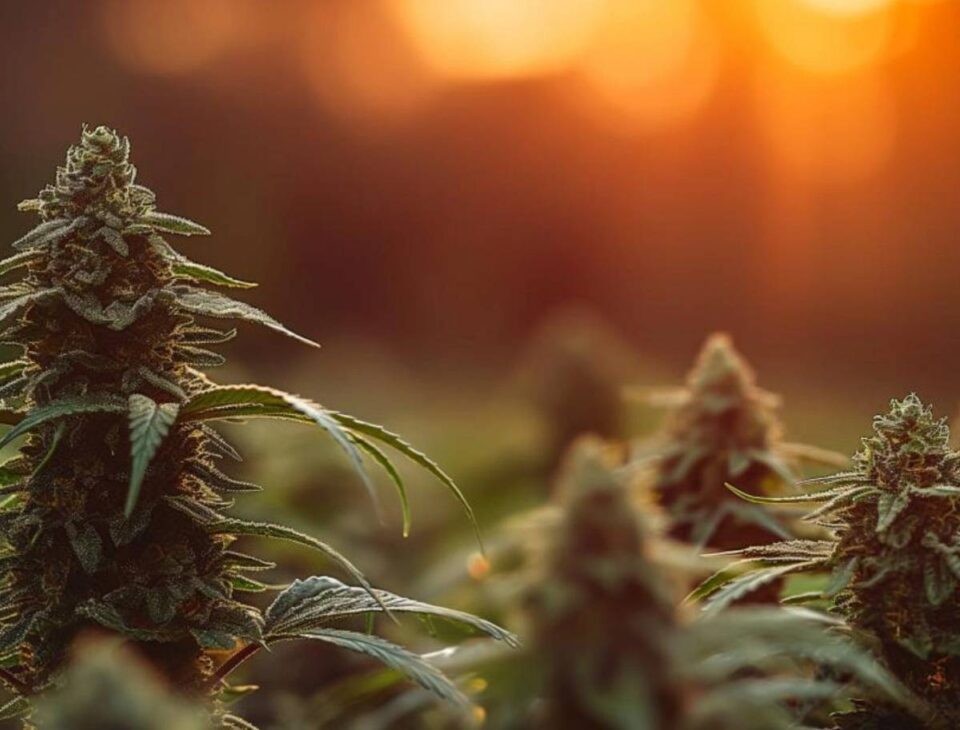
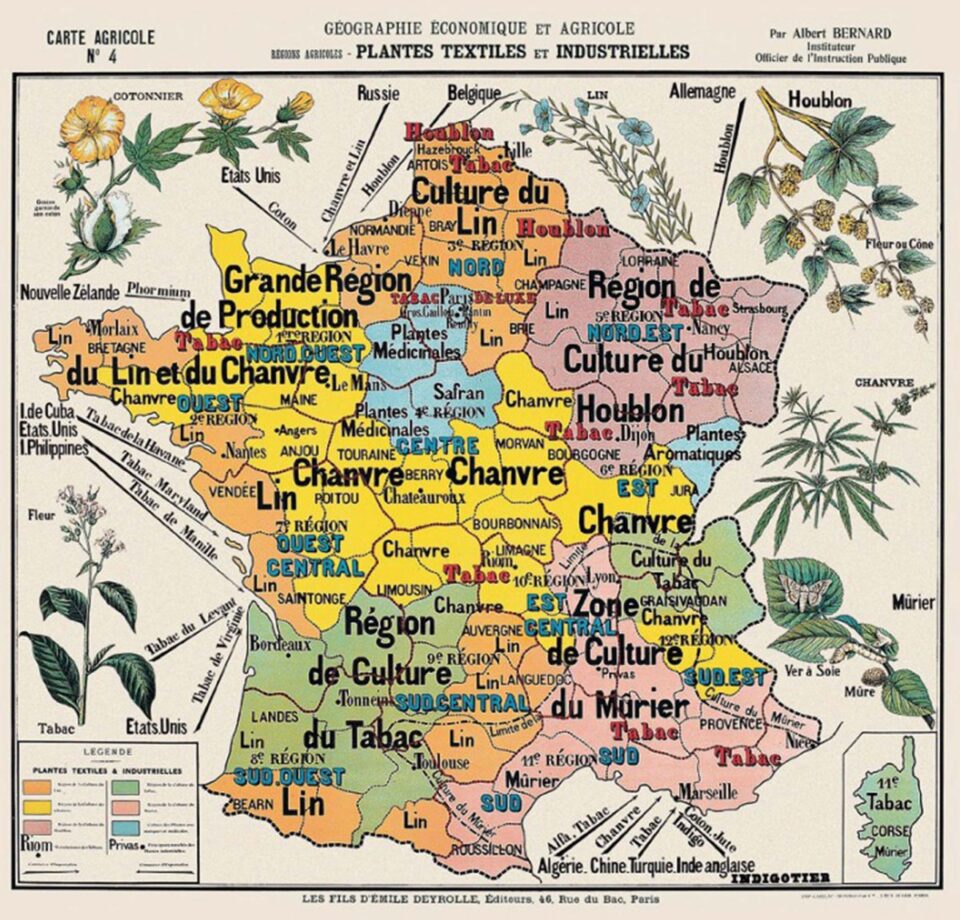
Hemp underwent a long period of decline before re-emerging in contemporary agricultural discourse. This revival, however, should not be confused with the historical use of hemp for textiles. Hemp inthe 21st century is primarily viewed as an industrial and environmentally friendly crop, with new applications: insulation materials, biomaterials, mulch, technical textiles, wellness, food and cosmetics. The context has changed, as have the supply chains.
The distinction between industrial hemp and CBD-related uses is crucial. Historically, the plant was grown for its fibre and seeds. Today, some production focuses on the flowers and cannabinoids, which places the crop within a different regulatory, economic and media context. In the Rhône Valley, as with CBD production in the Ardèche, this development has revived interest in hemp, but in a form that bears little resemblance to the hemp fields of the past.
This resurgence is also part of a broader trend. Local agricultural sectors are increasingly seeking low-input crops that are well-suited to the climate, contribute to the ecological transition and are capable of generating value locally. Hemp meets several of these objectives. It grows quickly, requires few inputs, fits well into crop rotations and offers a variety of market opportunities. In this sense, the current rediscovery of hemp is, in a way, a return to traditional practices: making the most of a simple plant.
But we must avoid oversimplifying matters when it comes to agriculture. The contemporary revival should not be seen as a direct continuation of the old rural world. Rather, it is a reinterpretation. The plant has the same origins, but the varieties, supply chains, standards, tools and expectations have changed. Understanding this evolution helps us to better grasp the place of hemp in the Rhône Valley, between agricultural heritage and a possible future.
Understanding evolution
Hemp: constantly evolving cultivation techniques and uses:
- Until recent decades, hemp was grown primarily for its fibre and seeds, not for its flowers.
- From the 1960s onwards, traditional varieties with separate male and female plants were replaced by monoecious varieties developed through research.
- The current revival is not a direct continuation of the traditional hemp-growing practices: it is based on different markets, different techniques and different standards ↗.
- The term CBD, short for cannabidiol *, is part of the very recent history of hemp, which has traditionally been grown predominantly in the Upper Rhône Valley in Switzerland – a country whose innovative and consistent legislation has enabled the development of a substantial industry.
From field to fibre: processes and transformations
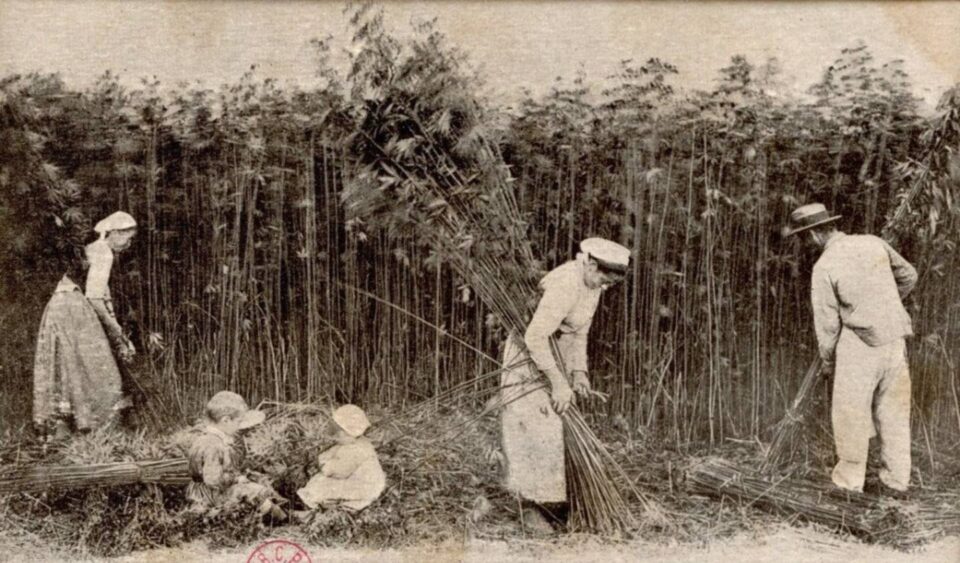
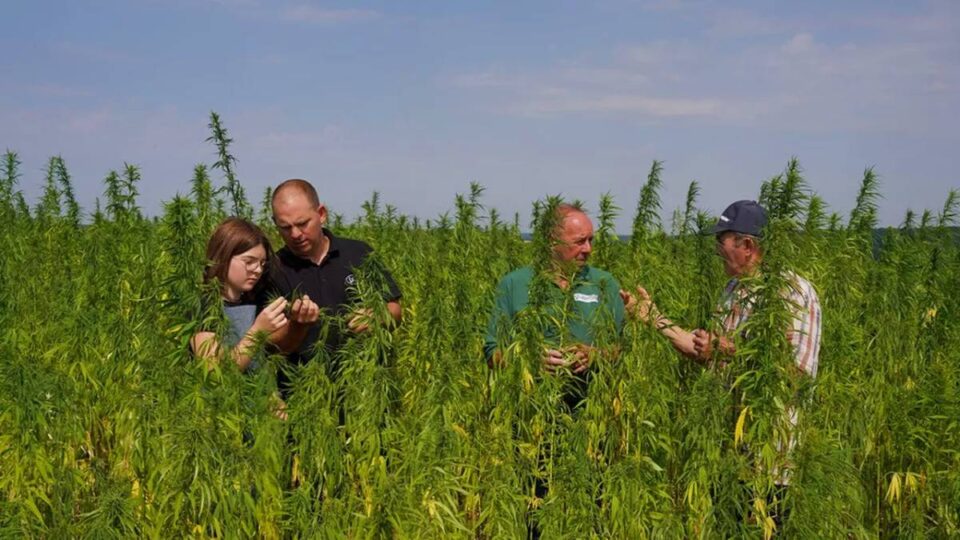
Traditional hemp cultivation was based on a series of precise steps. Sowing took place in the spring, in carefully prepared soil. The plant grew quickly, tall and dense. This rapid growth made it a prominent feature of the landscape, which contributed to its distinctive status in the countryside. It spent little time in the ground, but subsequently required a great deal of work to be put to good use.
The harvest was carried out by hand. The stalks were cut, gathered together and then prepared for the next stage. This is where the most delicate part of the work began: retting. This process involved soaking the stalks to separate the fibres from the woody part. Without this treatment, the fibre could not be properly processed. Retting could be carried out in running water, in pits or in specialised facilities, depending on the location and the period.
This stage was essential but often problematic. It required sufficient quantities of water and could cause odours or nuisance. This is one of the reasons why hemp was sometimes met with local opposition. Yet without retting, there would be no usable fibre. The whole rationale behind hemp therefore rested on a delicate balance between utility and constraints.
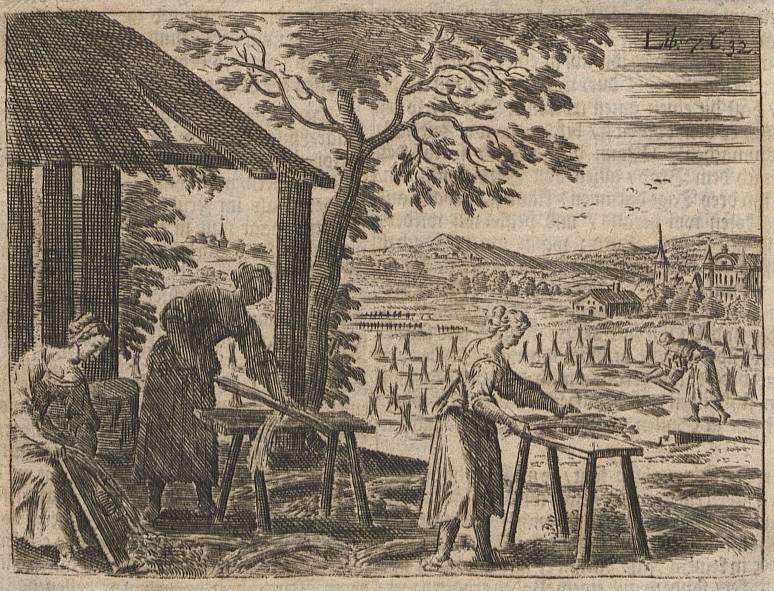
Once retted, the stalks had to be left to dry. This was followed by a series of mechanical processes: breaking down the woody part, separating the long fibres, removing the waste, and combing the material to make it suitable for spinning. It was a long and arduous task, often carried out using simple but effective tools. Hemp required patience: it was not a marginal crop but one that demanded expertise.
Gestures and vocabulary
Hemp, through the seasons and in everyday language:
- Sowing takes place in mid-April in moist soil, for example in Savigny ↗
Harvesting takes place after around four months of growth, usually in the third week of August.
Threshing took place after the sheaves had been left to dry for 4 to 5 days, to extract the hemp seeds.
- The local verb ‘nèjer’ refers to the process of retting hemp
The word ‘monye’ refers to a sheaf or bundle of hemp stalks ↗
The uses of hemp in everyday life
Hemp was originally used to produce textiles. Its fibres yielded a sturdy material, not as fine as other fibres but very strong. It was used to make canvas, work clothes, coarse sheets, sacks and everyday linen. In rural households, this type of production met an obvious need: to have sturdy, repairable items suited to everyday life.
Ropes and twine were another major use. In an agricultural economy, things need to be tied, hung, carried, fastened and secured. Hemp offered precisely this strength. It was used for ties, ropes, nets, harnesses and a host of minor uses that often went unnoticed. Its strength made it a staple material, indispensable to the running of rural activities.
The seeds, known as chènevis, complemented this textile use. They could be stored for animal feed or used to produce oil. This oil had various uses, depending on the location and the period. Here again, the whole plant was utilised. Nothing was considered in terms of abstract yield: every part had a potential use. This philosophy of minimising waste is one of the reasons for hemp’s enduring popularity in rural areas.
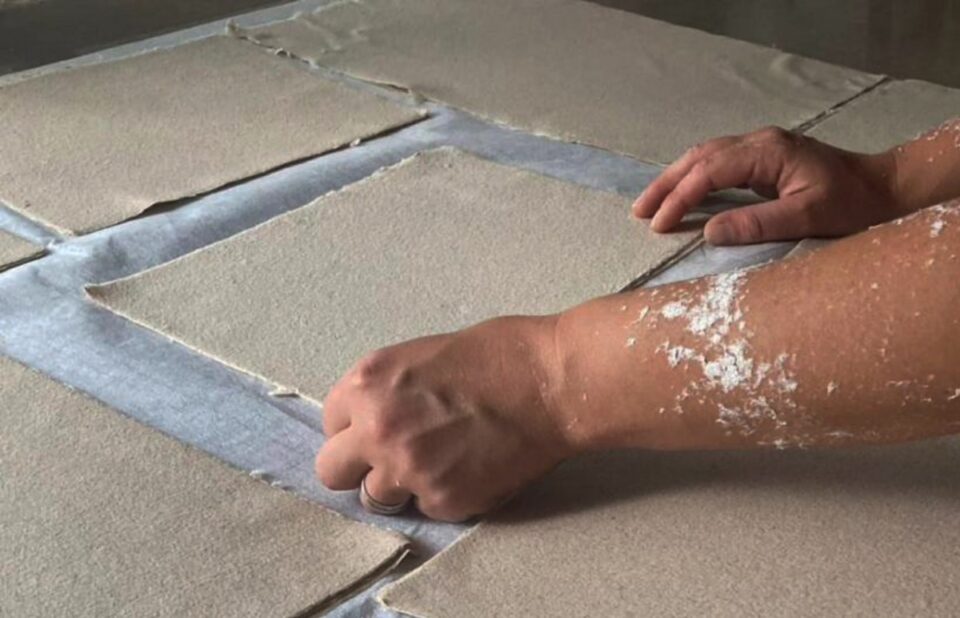
Hemp was also used in paper-making. Before wood became the dominant raw material, textile fibres played an important role in certain manufacturing processes. This links the plant to the history of writing, workshops and technical skills. It was therefore not merely an agricultural crop, but a raw material for the material economy in the broadest sense.
Some practical examples
- Hemp seeds could be processed into cooking oil, as was done in Savigny.
- In other documented regional traditions, hemp oil was also used for lighting ↗
- Fine hemp yarn, sometimes called ‘rita’, was used for sheets and shirts. The coarser yarn, known as ‘bourguin’, was used in particular for makingropes↗
- Hemp was also used in paper pulp beforewood fibre became widespread in the20th century, and was also widely used for rope-making in coastal regions ↗
Hemp fields in the landscape and place names
Hemp cultivation has left its mark on the local landscape. ‘Chanvrières’, or ‘chènevières’ depending on regional variations, refer to the plots of land where this plant was grown. These names are a reminder of a long-standing use of the land. When a place retains this type of place name for a long time, it is often because the activity it refers to was of real and lasting importance.
The landscape also bears witness to the history of hemp retting. Certain local place-names refer to retting pits, ditches or wetlands associated with the processing of the stalks. These toponymic traces are invaluable, as they enable us to reconstruct practices that have not always been described in detail in written sources. They show that hemp was not only present in the fields, but also influenced the way in which land and water were managed.
These place names are often the most visible remnants of activities that have disappeared. They sometimes survive better than buildings, tools or documents. In the Rhône Valley, they provide a fascinating gateway to understanding local agricultural history. A field name can reveal an ancient practice, a forgotten land-use pattern or a type of crop that once characterised part of the landscape.
The language itself preserves clues. Words relating to hemp, combing, soaking or spinning have sometimes been passed down through the generations in dialectal form. They bear witness to a specific technical world. Through them, we can glimpse a material culture in which words, actions and objects were inextricably linked. This linguistic memory is often just as valuable as written records.
Place names to look out for on the map
Here are a few examples of names and places found in the landscape and in everyday life, which can be seen on today’s maps:
- Chènevière = hemp field
- Né = ‘routoir’, i.e. a water hole fitted out for soaking boots ↗
- Place names recorded: lo Né, le Neix, Vers le Nex, Dessus les Neys, Vers les Nés
- In Savigny, Les Cheneviers is a reminder of the land where hemp used to be grown ↗
- The term ‘batseû’, meaning ‘hemp-beating machine’, survives in certain areas only as aplace name↗.
The gradual decline of traditional culture
The decline of hemp in the Rhône Valley cannot be attributed to a single cause. It is the result of a combination of economic and technical changes. Competition from cotton, which was easier to integrate into modern textile industries, played a major role. Other fibres also gained a foothold in the commercial market. Hemp, which requires more manual labour, gradually became less competitive.
Industrialisation accelerated this trend. Workshops and factories were looking for more standardised materials that were easier to process on a large scale. Traditional hemp production, however, involves time-consuming processes, artisanal processing and local organisation. When rural economies shifted towards a capitalist model on an international scale, short supply chains lost their appeal. The time spent retting, scutching, combing and spinning no longer held the same value when compared with high-yield mass cultivation.
Changes in lifestyles also played a part. As industrial textiles became more widespread, households produced fewer of their own fabrics and ropes. Domestic skills declined. At the same time, rural depopulation drained certain rural areas of their workforce. Without being passed on, these techniques were quickly lost. Hemp thus fell out of everyday use and became a part of the elders’ collective memory.
Rope-making has finally come under pressure from health regulations and conflicts over land use. In a valley criss-crossed by watercourses and heavily populated, competition between different activities is fierce. A useful practice can become a nuisance when it affects water quality or the use of the landscape. Hemp has therefore been undermined by economic, technical and regulatory factors alike.
Dates and developments
Some key dates in the gradual shift towards hemp cultivation in the Rhône Valley:
- Gradual technological development
Between the 18th and 19th centuries, technical advances relating to wood-based paper contributed to the decline of the traditional use of hemp fibres in papermaking.
- Conflicts over land use
In Savigny, an18th-century by-law reiterates the ban on retting hemp in rivers.
A municipal ordinance of 14 August 1814 reaffirmed this explicit prohibition. ↗
- Historical continuity
According to dialectal records from the Alps, hemp cultivation continued locally until around 1955. ↗
A topic straddling history and the future
Talking about hemp in the Rhône Valley means bringing together two different timeframes. On the one hand, there is a long history linked to the rural economy, domestic textiles and the valley’s crops. On the other, a contemporary revival, driven by the search for more sustainable materials and by an interest in low-impact farming, wellbeing and nutrition involving cannabinoids (CBD, CBG, etc.). These two worlds are not one and the same, but they do complement each other.
In the past, hemp was a plant of necessity. It met immediate needs in societies where local production was essential. Hemp today is seen more as a transitional resource or a medicinal alternative. It is credited with environmental, technical, economic and, at times, therapeutic qualities within a context of relocalisation. This evolution does not diminish its history: it extends it in a different form.
In the Rhône Valley, this return may well make sense. The region has a strong agricultural heritage, a tradition of resource circulation and an ability to combine local character with innovation. Hemp can therefore be seen here as both a heritage crop and a crop of the future. It is not a question of returning to the past, but of understanding the logic behind it in order to better shape the present.
This perspective gives the subject a broader scope. Hemp is not merely a subject of local history. It is a good example of how a plant can span the ages, change its function, lose its place and then find another. It is this evolution that makes its history interesting: it shows that agricultural crops never disappear entirely, but transform in line with the needs of society.
Hemp has played a low-key but enduring role in the Rhône Valley. Cultivated for its fibre and seeds, and used for ropes, cloth and domestic purposes, it has long been part of everyday rural life. Its cultivation has left its mark on the landscape, in the local vocabulary and in the archives. Its history tells the story of a rural economy based on practicality, versatility and patient labour.
Its decline can be attributed to the technical and economic changes of the 19th and 20th centuries. But its resurgence in the 21st century, in a very different context, shows that a plant can return to the forefront of discussion when it meets new needs. Hemp is therefore not merely a relic of the past. It also reflects today’s agricultural and regional choices.